
Forget the crystal ball. Focus on these 3 skills.
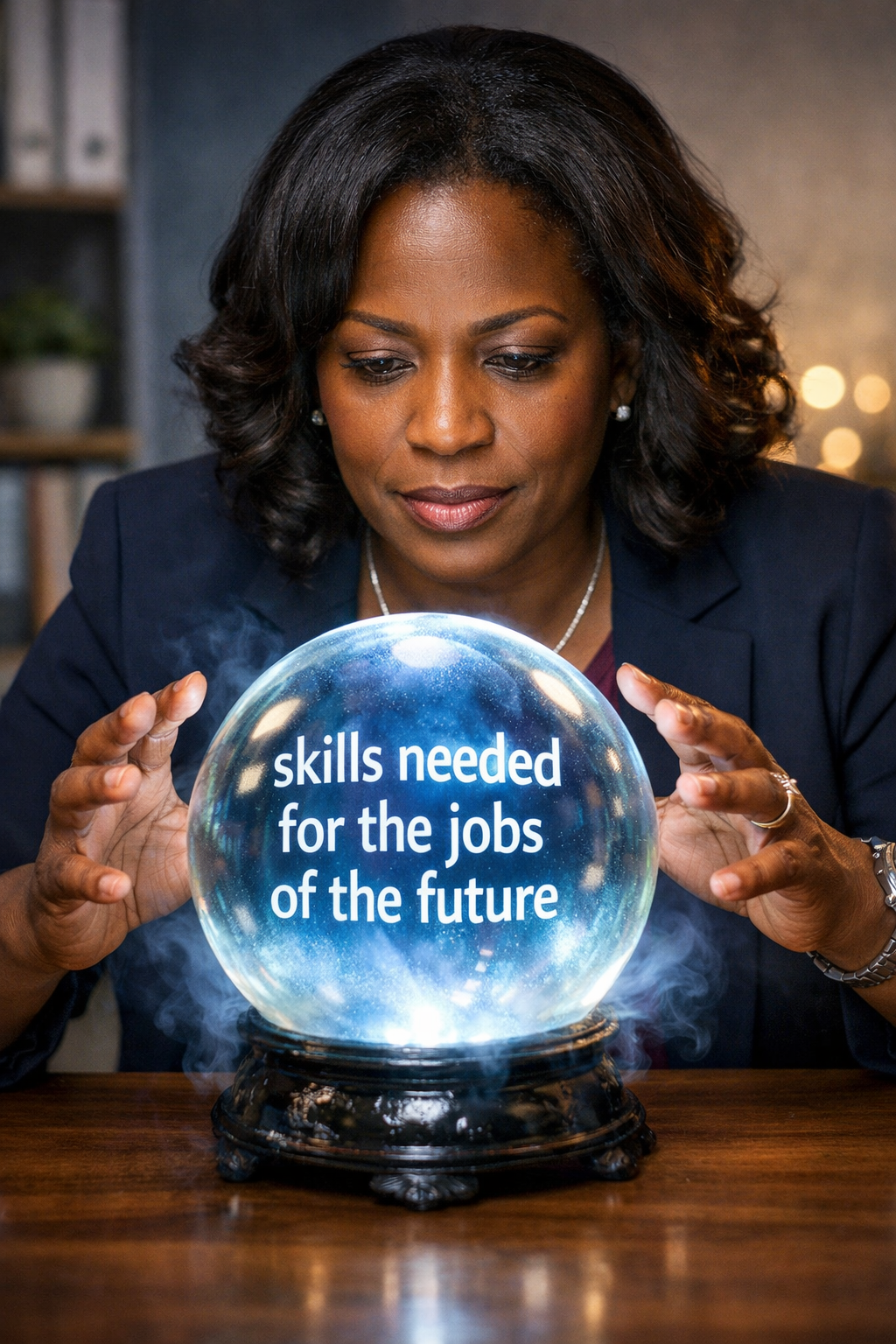
As companies rush to train employees on AI tools and predict the future skills needed at work, the most durable capabilities remain deeply human: critical thinking, communication and the ability to work well with others.
Why it matters: The half-life of technical skills keeps shrinking. The World Economic Forum estimates that nearly 40% of workers’ core skills will change by 2030.
But the skills that help people interpret information, influence decisions and collaborate across teams have remained valuable for decades — and AI may make them even more important.
Start with critical thinking. AI is extraordinary at generating answers. It is much less reliable at evaluating whether those answers are correct, relevant or ethical.
Critical thinking allows employees to analyze information, question assumptions and make sound decisions in complex environments.
In an AI-saturated workplace, the skill isn’t simply knowing things, it’s evaluating things.
Organizations increasingly need workers who can evaluate AI outputs and apply human judgment rather than blindly trusting automated results.
AI can generate ideas. Humans still decide which ones matter.
Then there’s communication. Despite decades of new technology, communication continues to rank as the most in-demand job skill globally.
AI can draft emails or summarize documents, but it can’t fully replicate the social work of leadership: persuading people, navigating disagreement, or building alignment around a decision.
Clear communication also strengthens collaboration and performance. Research consistently shows that teams with strong communication practices perform better and coordinate work more effectively.
In other words, tools may change. But organizations still run on conversations.
Finally, there’s the ability to work well with others. Modern work is increasingly cross-functional. Success depends on people from different disciplines working together to solve problems.
Strong collaboration helps organizations share information, innovate faster, and break down the silos that slow decision-making.
And as AI becomes embedded in workflows, human collaboration becomes even more valuable — because technology adoption itself depends on how well people coordinate around it.
What this means for L&D leaders: The opportunity for learning leaders isn’t just to teach people how to use AI.
It’s to build the skills that help people think better, communicate better, and collaborate better in an AI-rich world.
Our approach: In all our programs and workshops - even those that focus on or use AI - we emphasize and continually reinforce the three skills outlined above.
While there’s no doubt the technology will advance and change, these three skills will always be in style.
The bottom line: The future of work may be powered by AI, but it will still be led by people who think clearly, communicate effectively, and work well with others.
